The Deaf Village in Bali - Bengkala
Celebrating Inclusion and Uniqueness
A Hidden Cultural Gem That Celebrating Inclusion and Uniqueness
When people talk about Bali, it’s usually about its breathtaking nature, rich culture, or the warmth of its people. But beyond the beauty and charm, Bali holds a unique and heartwarming secret — a place known as the Deaf Village.
This village, officially called Desa Bengkala, is often referred to as Desa Kolok, which comes from the Balinese word Kolok, meaning “deaf.” But is this village truly inhabited only by deaf people?

Out of approximately 3,000 residents, about 2% of the population is born deaf. What makes this village so remarkable is how it has embraced inclusivity. In Bengkala, both hearing and non-hearing residents use a local sign language, allowing them to live side-by-side in harmony — with no discrimination, just deep mutual understanding.
Researchers have studied this phenomenon and found that the deafness here is largely due to genetic factors. However, the locals also hold onto a captivating legend. According to village folklore, the deafness in Bengkala is the result of a curse from an ancient king, Jaya Pangus. It's said that long ago, villagers pretended to be deaf and mute to protest against heavy taxation — and were then cursed by the angry ruler.
Despite these challenges, the spirit of the village remains full of life. One of their most amazing contributions is a unique cultural dance called Janger Kolok. Since the dancers cannot hear the music, they follow visual cues from the drummer, who signals them with specific hand movements to guide each change in rhythm and movement.
The story of Bengkala teaches us something powerful: difference is not something to be feared or fixed — it’s something to be embraced. In a world that often divides, this small village in North Bali shows us how inclusivity, empathy, and respect can build something truly beautiful.
Because in the end, true uniqueness is born from differences that are valued.
The documentary below is in Indonesian, but you can have it translated in your language by YouTube.
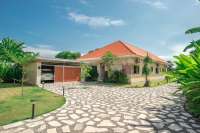
Spacious Beautiful Garden Villa for Sale
Kaliasem, Lovina Bali
Rp 4.900.000.000
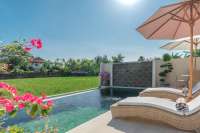
Minimalist Elegant Style Villa for Sale
Rice Paddy View, Cozy, Lovina
Rp 3.400.000.000
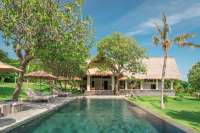
A Dream Villa with Beautiful Garden
Peaceful, Lush, Inviting
EUR € 502.000

Oceanview 3 Bedrooms Villa in the Hills
Sing Sing Temukus North Bali
EUR € 255.000
NIB 9120202481764
Villas For Rent and For Sale in Bali
Luxury Bali Real Estate Development
Jl Raya Singaraja Seririt 168 Kalibukbuk, North Bali
Call us +62 821-4680-0076 / +62 813-3774-5772
Google Maps North Bali
Send us an email
Facebook - Instagram
Bali VIP Car - Airport Fast Track
© 2002 - 2026 BPI - Palm Living Bali
Privacy Policy - Terms of Use
About Us, BPI - Palm Living
Bali Real Estate Archive
Onroerend Goed Bali - Properti Bali
Недвижимость на Бали