Pecalang: The Balinese Guardians
Keeping the Bali Island Safe

When visiting Bali, you may notice men wearing black shirts, black-and-white checkered sarongs, and traditional Balinese headbands. These men are called Pecalang, the traditional guardians who help maintain order and safety across Balinese villages.
Although they may look similar to security officers, Pecalang are much more than that. They represent an important part of Bali’s cultural identity and community-based governance.
Who Are Pecalang?
Pecalang are traditional security officers in Bali’s customary villages (desa adat). Unlike the national police, Pecalang operate under Balinese customary law known as awig-awig.
Their role is not a full-time profession or paid job. Instead, becoming a Pecalang is considered a community duty and a form of service to the village. Members volunteer their time and energy to protect cultural traditions, maintain order, and ensure harmony within the community.
Today, almost every traditional village in Bali has its own Pecalang unit that works closely with village leaders and local communities.
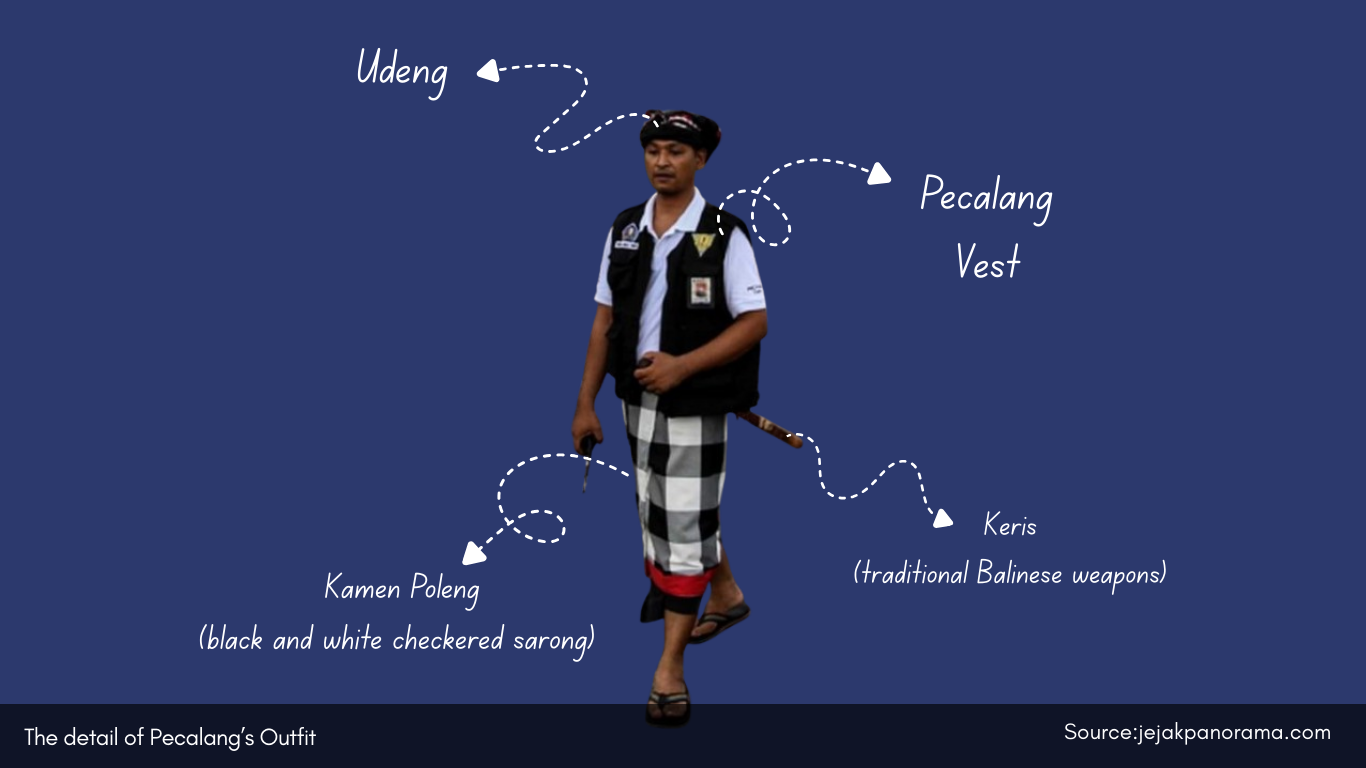
Pecalang in Bali have a unique identity that distinguishes them from others, particularly through their traditional uniform. Their attire typically consists of an udeng (a traditional Balinese headcloth) with a checkered pattern at the edge, a vest marked with the word Pecalang, and a kamen poleng (a traditional Balinese sarong) featuring a black-and-white checkered motif. They also commonly carry a keris, a traditional dagger, and a handheld radio for communication.
The Important Role of Pecalang in Balinese Society
Pecalang play a crucial role in maintaining peace and cultural harmony in Bali. Their responsibilities cover several important areas of community life.
1. Security During Religious Ceremonies
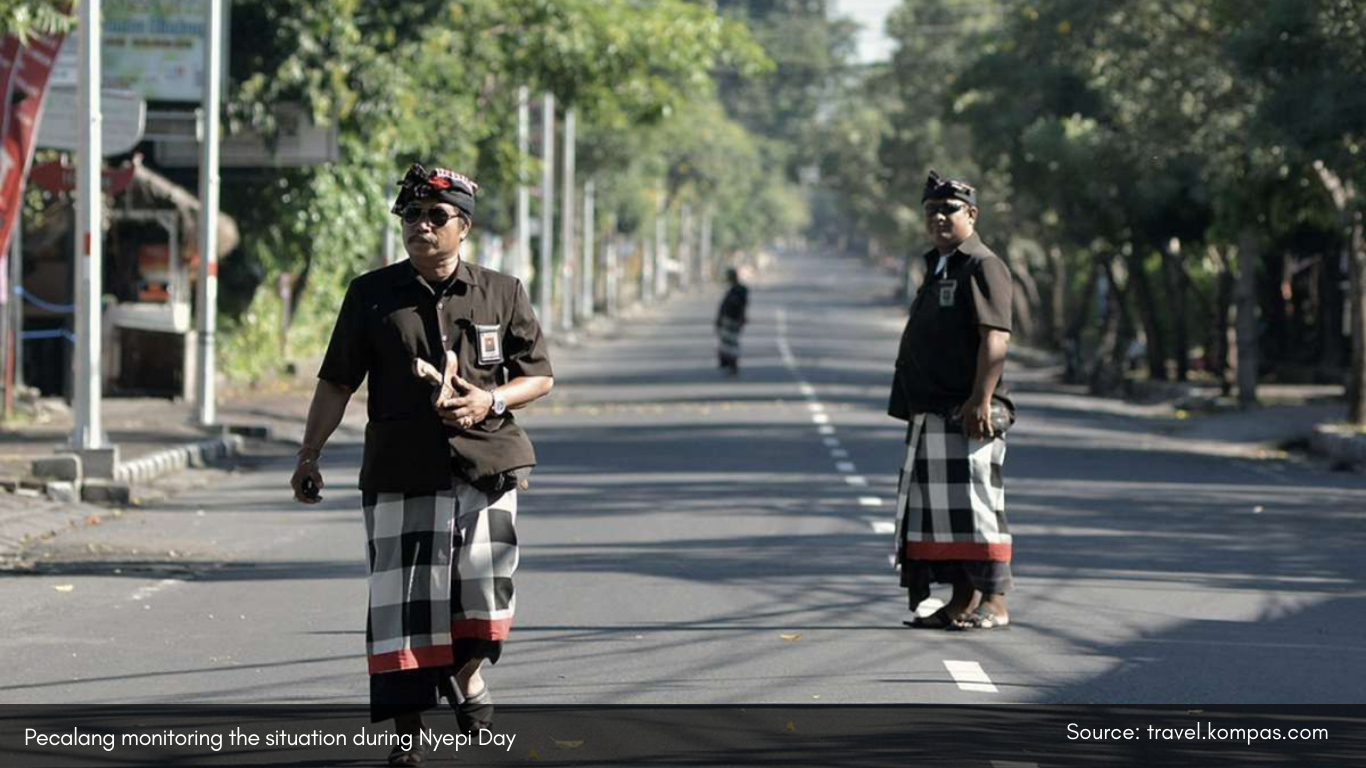
One of the main duties of Pecalang is providing security during Balinese Hindu ceremonies and festivals. Bali hosts numerous religious events throughout the year, and Pecalang help ensure these ceremonies run safely and smoothly.
They play a particularly important role during major events such as Nyepi, when the entire island observes a day of silence and strict restrictions. Pecalang help enforce these rules within their villages and ensure the sacred atmosphere is respected. They also manage crowds during temple anniversaries and ceremonies like Piodalan and Pengrupukan.
2. Maintaining Village Security
Pecalang regularly patrol their village areas to help maintain safety and prevent disturbances. They also assist in resolving social disputes or community conflicts before they escalate.
Their presence strengthens community trust because they are not outsiders—they are members of the village itself.
3. Traffic and Crowd Management
During large ceremonies or community gatherings, Pecalang help manage traffic flow, parking areas, and pedestrian movement. This ensures that religious processions and events can proceed without disruption.Visitors to Bali often see Pecalang directing traffic around temples or ceremony routes.
4. Enforcing Balinese Customary Law
Pecalang also help enforce traditional village regulations known as awig-awig. These rules guide daily life in Balinese communities and help maintain social harmony. Because Pecalang are respected members of the village, their role in enforcing these regulations is generally well accepted.
5. Promoting Religious Tolerance
.png)
Although Pecalang are closely connected to Balinese Hindu traditions, their responsibilities go beyond Hindu ceremonies. They also help maintain security during celebrations of other religions, including Eid al-Fitr prayers and community events. This reflects Bali’s strong culture of tolerance, respect, and interfaith harmony.
Requirements to Become a Pecalang in Bali
Becoming a Pecalang is not something people can simply apply for. Members are selected by the traditional village leadership, and several important requirements must be fulfilled.
To become a Pecalang, a person typically must:
- Be Hindu, since Pecalang duties are closely connected with Balinese Hindu traditions and ceremonies.
- Be a registered member (krama) of the local traditional village (desa adat)
- Be married, which is often viewed as a sign of maturity and responsibility in Balinese culture.
- Be between 25 and 60 years old
- Be appointed by the local banjar (community council), usually through village discussions and agreements.
- Have a good reputation and strong moral character, with no criminal history or legal problems
- These requirements ensure that Pecalang are trusted, respected, and capable individuals who can carry out their responsibilities with integrity.
Pecalang are more than just community security officers they are symbols of Balinese cultural preservation and collective responsibility.
Through their dedication and service, they help protect Bali’s traditions, maintain social harmony, and ensure that religious and cultural events continue to thrive for future generations.
For visitors, seeing Pecalang at ceremonies or village events offers a unique glimpse into how community-based traditions still play a vital role in daily life on the island of Bali

Spacious Beautiful Garden Villa for Sale
Kaliasem, Lovina Bali
Rp 4.900.000.000

Minimalist Elegant Style Villa for Sale
Rice Paddy View, Cozy, Lovina
Rp 3.400.000.000

A Dream Villa with Beautiful Garden
Peaceful, Lush, Inviting
EUR € 502.000

Oceanview 3 Bedrooms Villa in the Hills
Sing Sing Temukus North Bali
EUR € 255.000
NIB 9120202481764
Villas For Rent and For Sale in Bali
Luxury Bali Real Estate Development
Jl Raya Singaraja Seririt 168 Kalibukbuk, North Bali
Call us +62 821-4680-0076 / +62 813-3774-5772
Google Maps North Bali
Send us an email
Facebook - Instagram
Bali VIP Car - Airport Fast Track
© 2002 - 2026 BPI - Palm Living Bali
Privacy Policy - Terms of Use
About Us, BPI - Palm Living
Bali Real Estate Archive
Onroerend Goed Bali - Properti Bali
Недвижимость на Бали